Mission Mountains Wilderness

The Mission Mountains

Mission Mountains Wilderness
Located in the Flathead National Forest in Montana. 
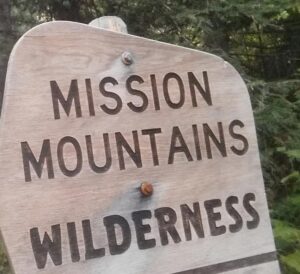
Mission Mountain Wilderness

The Mission Mountains Wilderness is on the Swan Lake Ranger District of the Flathead National Forest in northwestern Montana. The Forest Service manages it as part of the National Forest System. Officially classified as Wilderness on January 4, 1975, the 73,877 acre area is managed in accordance with the Wilderness Act of 1964.  The Mission Mountains run along the east shore of Montana’s Flathead Lake.

When to Visit – Most people visit the wilderness between July 1 and October 1. Snow-filled passes and high streams make earlier travel difficult and hazardous. High lakes do not open up until early or mid-June.

June is normally a wet month. Snow still covers high, shaded basins and surrounds trees.

July, August, and early September are dry months. Daytime temperatures are the 80-90 degree range. Showers are frequent. Nights are very cool. Snow occur at any time. Heavy snow generally occurs in late October and early November.

If you are a skier or winter camper, late February through May provide the best snow conditions and longer days. When planning an extended backcountry trip, be informed of potential avalanche conditions.

Trails – There are about 45 miles of maintained Forest Service system trails in the Mission Mountains. Most trails are better suited to hiking than horseback riding because of rugged terrain.
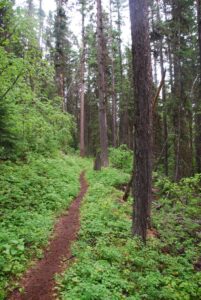
Recreation PermitsTravel is primarily by foot with some horseback use. Mountain bikes, hang gliders, motorized trail bikes, motorcycles, three and four wheelers, and snowmobiles are not permitted. Few of the trails can be called easy. Some are especially difficult because of steepness. You should be an experienced hiker to travel cross country and should possess map reading and compass skills.

Throughout the Mission Mountains you will find old Indian and packer trails. These are usually steep and difficult to follow. They are suitable for only the most experienced horse users or backpackers.

Access Points – The major access points into the Mission Mountains Wilderness from the Swan Valley: Glacier Creek, Cold Lakes, Piper Creek, Fatty Creek, and Beaver Creek. Other access points from the Swan Valley include Lindbergh Lake (south end trail reached by boat), Jim Lakes, Hemlock Creek, Meadow Lake, and Elk Point.

There are also three major access points from the Salish & Kootenai Indian Reservation side of the Mission Mountains. Access through tribal lands requires a permit. These permits may be purchased at major sporting goods stores in Missoula and the Mission Valley or through the Confederated Salish and Kootenai Tribal Recreation Department in Pablo, Montana, phone (406) 675-2700.

A major portion of the Mission Mountains is suitable for backpacking only. Travel is strenuous, but it has many advantages: independence and self-sufficiency, opportunities for solitude, and you’re more carefree when backpacking.

DAY HIKES: The Mission Mountains has several hikes ranging from 1 1/4 miles to 6 miles (one way) which can be completed in a day. You will carry less on your back and travel more easily.

BACKPACKING: Backpacking requires careful planning. Proper equipment, with maximum utility and minimum weight, will make the trip easier. The most important items will be your pack, sleeping bag, and foot gear. Take only what you need. A pack that is too heavy can spoil your trip. A pack without adequate food, clothing and shelter can be equally disappointing and unpleasant.

The Go Hike With Mike trail guide contains most every trailhead along the Swan front of the Mission Mountains.

[embedyt] https://www.youtube.com/watch?v=DJxzOLibbOc[/embedyt]

Mission Mountains Wilderness

The Mission Mountains

Mission Mountains Wilderness
Located in the Flathead National Forest in Montana. 

The Mission Mountains Wilderness is on the Swan Lake Ranger District of the Flathead National Forest in northwestern Montana. The Forest Service manages it as part of the National Forest System. Officially classified as Wilderness on January 4, 1975, the 73,877 acre area is managed in accordance with the Wilderness Act of 1964.  The Mission Mountains run along the east shore of Montana’s Flathead Lake.

The Mission Mountains, Holland LakeWhen to Visit – Most people visit the wilderness between July 1 and October 1. Snow-filled passes and high streams make earlier travel difficult and hazardous. High lakes do not open up until early or mid-June.

June is normally a wet month. Snow still covers high, shaded basins and surrounds trees.

July, August, and early September are dry months. Daytime temperatures are the 80-90 degree range. Showers are frequent. Nights are very cool. Snow occur at any time. Heavy snow generally occurs in late October and early November.

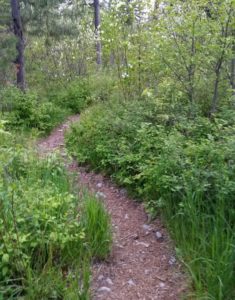
Mission Mountains Trail HeadIf you are a skier or winter camper, late February through May provide the best snow conditions and longer days. When planning an extended backcountry trip, be informed of potential avalanche conditions.

Trails – There are about 45 miles of maintained Forest Service system trails in the Mission Mountains. Most trails are better suited to hiking than horseback riding because of rugged terrain.

Travel is primarily by foot with some horseback use. Mountain bikes, hang gliders, motorized trail bikes, motorcycles, three and four wheelers, and snowmobiles are not permitted. Few of the trails can be called easy. Some are especially difficult because of steepness. You should be an experienced hiker to travel cross country and should possess map reading and compass skills.

Throughout the Mission Mountains you will find old Indian and packer trails. These are usually steep and difficult to follow. They are suitable for only the most experienced horse users or backpackers.

Mission Mountain TrailAccess Points – The major access points into the Mission Mountains Wilderness from the Swan Valley: Glacier Creek, Cold Lakes, Piper Creek, Fatty Creek, and Beaver Creek. Other access points from the Swan Valley include Lindbergh Lake (south end trail reached by boat), Jim Lakes, Hemlock Creek, Meadow Lake, and Elk Point.

There are also three major access points from the Salish & Kootenai Indian Reservation side of the Mission Mountains. Access through tribal lands requires a permit. These permits may be purchased at major sporting goods stores in Missoula and the Mission Valley or through the Confederated Salish and Kootenai Tribal Recreation Department in Pablo, Montana, phone (406) 675-2700.

A major portion of the Mission Mountains is suitable for backpacking only. Travel is strenuous, but it has many advantages: independence and self-sufficiency, opportunities for solitude, and you’re more carefree when backpacking.

DAY HIKES: The Mission Mountains has several hikes ranging from 1 1/4 miles to 6 miles (one way) which can be completed in a day. You will carry less on your back and travel more easily.

BACKPACKING: Backpacking requires careful planning. Proper equipment, with maximum utility and minimum weight, will make the trip easier. The most important items will be your pack, sleeping bag, and foot gear. Take only what you need. A pack that is too heavy can spoil your trip. A pack without adequate food, clothing and shelter can be equally disappointing and unpleasant.

The Go Hike With Mike trail guide contains most every trailhead along the Swan front of the Mission Mountains.

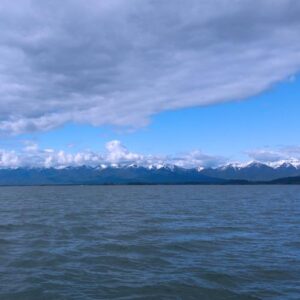
Looking west at Flathead Lake from Yellowbay State Park.

Follow Mike on Instagram or subscribe to his YouTube Channel

#gohikewithmike

Flathead Lake Montana

Flathead Lake

Flathead Lake is the largest natural freshwater lake in the western United States.  Lying in the Flathead Valley of Northwest Montana, the lake is more then 300 feet deep and extends north and south some 28 miles and is seven to 15 miles wide.

As you drive and drive on the roads that hug Flathead Lake’s shoreline, (US Highway 93 on the west and Montana Route 35 on the east) it’s hard to believe manmade dams that are so common in the Pacific Northwest didn’t create it. Rather, the lake is a fortuitous product of the activity of ice-age glaciers, and is fed by the Swan and Flathead Rivers.

All manner of water sports are enjoyed upon its 200 square miles of surface. Several state parks and lakeshore communities have boat launches and marinas on the Lake.

Flathead LakeYou can avail yourself of a boat tour or rent one of the many types of watercraft including canoes, kayaks, windsurfers, hydro bikes, sailing and fishing boats. Serious anglers can arm themselves with heavy-duty equipment and probe the 300-foot deep Flathead Lake for trophy Mackinaw. Lake trout, salmon, perch, pike, bass, and whitefish are found in the Flathead area’s many lakes.

Locals know summer has arrived when a steady stream of traffic starts to build on the secondary roads. So in peak season expect to share your enjoyment of the Flathead Valley with many others, although the mountains still offer room to get-away if you are willing to exert yourself.

#MontanasFlatheadLake

Flathead Lake Montana

Flathead Lake Montana

Flathead Lake is the largest natural freshwater lake in the western United States.  Lying in the Flathead Valley of Northwest Montana, the lake is more then 300 feet deep and extends north and south some 28 miles and is seven to 15 miles wide.

As you drive and drive on the roads that hug Flathead Lake’s shoreline, (US Highway 93 on the west and Montana Route 35 on the east) it’s hard to believe manmade dams that are so common in the Pacific Northwest didn’t create it. Rather, the lake is a fortuitous product of the activity of ice-age glaciers, and is fed by the Swan and Flathead Rivers.

All manner of water sports are enjoyed upon its 200 square miles of surface. Several state parks and lakeshore communities have boat launches and marinas on the Lake.

Flathead LakeYou can avail yourself of a boat tour or rent one of the many types of watercraft including canoes, kayaks, windsurfers, hydro bikes, sailing and fishing boats. Serious anglers can arm themselves with heavy-duty equipment and probe the 300-foot deep Flathead Lake for trophy Mackinaw. Lake trout, salmon, perch, pike, bass, and whitefish are found in the Flathead area’s many lakes.

Locals know summer has arrived when a steady stream of traffic starts to build on the secondary roads. So in peak season expect to share your enjoyment of the Flathead Valley with many others, although the mountains still offer room to get-away if you are willing to exert yourself.

Get your copy today.

The National Bison Range

The National Bison Range was established in 1908 and is one of the oldest Wildlife Refuges in the nation. The Range is about 25 miles south of Montana’s Flathead Lake.

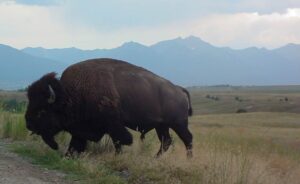
American BisonA large portion of the 18, 500 acre Range consists of native Palouse prairie; forests, wetlands, and streams are also found here providing a wide range of habitats for wildlife. Elk, deer, pronghorn, black bear, coyote and ground squirrels are just some of the mammals that share the area with 350 to 500 bison. Over 200 species of birds also call this home including eagles, hawks, meadowlarks, bluebirds, ducks, and geese.

General Information

Fees are charged during the summer (mid-May to late October). The Range is part of the U.S. Fee System and accepts Golden Passes and Federal Waterfowl Stamps. Pay fees at the Visitor Center.

The Range is closed at night. Check the Contact Us page for current hours.

Camping is not allowed on the Range.

Visitor Center

The best place to start your visit is at the Visitor Center. Here you will find informative displays and handouts, restrooms, videos, a bookstore, and staff to answer your questions. Pay entrance fees here.  For more information about the Bison Range and other activities in northwest Montana, consider purchasing a copy of the Flathead Lake Vacation Guide.

Auto Tours

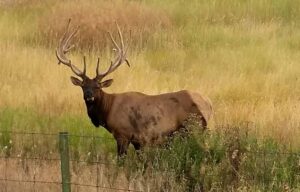
Montana Bull ElkPrairie Drive/West Loop: a 5-mile gravel road that travels through the flats. It is open to trailers and large RVs. It goes by the Bison Display Pasture. Plan for 1/2 hour. Open year round.

Red Sleep Mountain Drive: a 19-mile, one-way, gravel road which gains 2,000feet. There are many switchbacks and 10% grades along the drive. No trailers or vehicles over 32 feet are allowed on this drive. Allow 1 1/2 to 2 hours. Open mid-May to late October. (Check the Contact Us page for current information.)

Walking Trails: Hiking is limited on the Range to a few short walking trails. A mile-long Nature Trail is located at the Picnic Area and 1/4-mile Grassland Trail is at the Visitor Center. The 1/2-mile Bitterroot Trail and 1-mile High Point trail are both located off the Red Sleep Mountain Drive. Walking away from your vehicle is prohibited except for these designated trails. For a complete listing of trails around Flathead Lake, see the Go Hike With Mike Trail guide.

Picnic Area

The Range has a picnic area near Mission Creek. There are tables, grills, water, and accessible toilets. A covered pavilion is available on a first-come, first-served basis. There are no garbage cans, so please pack out all trash.

How to get here:

From Missoula: Travel north on US Highway 93 to Ravalli, turn left(to the west) on to State Highway 200, travel approximately 5 miles to the junction of Highways 200 and 212, turn right(to the north) and travel approximately 5 miles to the entrance of the Range at Moiese.

From Kalispell: Travel south on US Highway 93 or State Highway 35 to Polson, then travel Highway 93 through Pablo and Ronan to the junction of Highway 93 and State Highway 212, travel 12 miles (through Charlo) to the entrance of the Range at Moiese.

From the west: Travel Highway 200 through Dixon to the junction of Highways 200 and 212, turn left(to the north) and travel approximately 5 miles to the entrance of the Range at Moiese.

Other places you may want to visit when your in Montana.

The National Bison Range

An American Bison

The National Bison Range was established in 1908 and is one of the oldest Wildlife Refuges in the nation. The Range is about 25 miles south of Montana’s Flathead Lake.

American BisonA large portion of the 18, 500 acre Range consists of native Palouse prairie; forests, wetlands, and streams are also found here providing a wide range of habitats for wildlife. Elk, deer, pronghorn, black bear, coyote and ground squirrels are just some of the mammals that share the area with 350 to 500 bison. Over 200 species of birds also call this home including eagles, hawks, meadowlarks, bluebirds, ducks, and geese.

General Information

Fees are charged during the summer (mid-May to late October). The Range is part of the U.S. Fee System and accepts Golden Passes and Federal Waterfowl Stamps. Pay fees at the Visitor Center.

The Range is closed at night. Check the Contact Us page for current hours.

Camping is not allowed on the Range.

Visitor Center

The best place to start your visit is at the Visitor Center. Here you will find informative displays and handouts, restrooms, videos, a bookstore, and staff to answer your questions. Pay entrance fees here.  For more information about the Bison Range and other activities in northwest Montana, consider purchasing a copy of the Flathead Lake Vacation Guide.

Auto Tours

Montana Bull ElkPrairie Drive/West Loop: a 5-mile gravel road that travels through the flats. It is open to trailers and large RVs. It goes by the Bison Display Pasture. Plan for 1/2 hour. Open year round.

Red Sleep Mountain Drive: a 19-mile, one-way, gravel road which gains 2,000feet. There are many switchbacks and 10% grades along the drive. No trailers or vehicles over 32 feet are allowed on this drive. Allow 1 1/2 to 2 hours. Open mid-May to late October. (Check the Contact Us page for current information.)

Walking Trails: Hiking is limited on the Range to a few short walking trails. A mile-long Nature Trail is located at the Picnic Area and 1/4-mile Grassland Trail is at the Visitor Center. The 1/2-mile Bitterroot Trail and 1-mile High Point trail are both located off the Red Sleep Mountain Drive. Walking away from your vehicle is prohibited except for these designated trails. For a complete listing of trails around Flathead Lake, see the Go Hike With Mike Trail guide.

Picnic Area

The Range has a picnic area near Mission Creek. There are tables, grills, water, and accessible toilets. A covered pavilion is available on a first-come, first-served basis. There are no garbage cans, so please pack out all trash.

How to get here:

From Missoula: Travel north on US Highway 93 to Ravalli, turn left(to the west) on to State Highway 200, travel approximately 5 miles to the junction of Highways 200 and 212, turn right(to the north) and travel approximately 5 miles to the entrance of the Range at Moiese.

From Kalispell: Travel south on US Highway 93 or State Highway 35 to Polson, then travel Highway 93 through Pablo and Ronan to the junction of Highway 93 and State Highway 212, travel 12 miles (through Charlo) to the entrance of the Range at Moiese.

From the west: Travel Highway 200 through Dixon to the junction of Highways 200 and 212, turn left(to the north) and travel approximately 5 miles to the entrance of the Range at Moiese.

ESTES LAKE TRAIL #96

Hiking in Montana

The Estes Lake trail is 1.5 miles long. It begins at the junction with Road #498 and ends at Estes Lake.

[embedyt] https://www.youtube.com/watch?v=g8HE4aXsqVQ[/embedyt]

The trail starts out climbing slightly, goes over a knoll, and then descends, winding through the topography and between small wetlands; there is a small cedar grove near the lake. Estes Lake is a tannic lake bordered by lily pads and scattered with blue dragon flies (depending on the time of year).

The trail is open for Off Highway Vehicles (OHV) less than or equal to 50 inches wide, 2 wheeled vehicles, mountain biking, horseback riding, and hiking.

Estes Lake trail directions, from Bigfork, go south on Highway 35 for 0.7 miles, turning left onto Hwy 209. Stay on 209 for 3 miles, turning right at the light onto South Ferndale Rd. After 2 miles, merge right.

Estes Lake trail

Mike has been up and down this trail many times.  It is a favorite for out of area friends and guests.  If you want to make it interesting you can begin the trail down and it breaks off to many different points.  The beauty is it is really hard to get lost.  If you Hike down you end at Flathead Lake, or Crane Mountain.  In either case civilization is just around the corner.

If you are hiking somewhere other then around Montana’s Flathead Lake be sure to check out the Top 100 Hiking Blogs from Feed Spot.

Hiking in Montana Videos

Hiking in Montana.  Enjoy some videos from Mike’s Hikes around northwest Montana.  There are unlimited hiking options available to you. If you are looking for more vacationing information and less hiking information try the Montana’s Flathead Lake Vacation Guide. If your still reading I will assume you are interested in our trail guide, or maybe to enjoy some video clips.  Be sure to subscribe to Mike’s YouTube channel.

[embedyt] https://www.youtube.com/watch?v=lacrms7aqLw[/embedyt]

[embedyt] https://www.youtube.com/watch?v=un8_vnBygxI[/embedyt]

[embedyt] https://www.youtube.com/watch?v=AcoyWB50ciA[/embedyt]

Hiking in Montana

The Mission Mountain Wilderness

[embedyt] https://www.youtube.com/watch?v=1FgsYxgORVQ[/embedyt]

[embedyt] https://www.youtube.com/watch?v=DJxzOLibbOc[/embedyt]

[embedyt] https://www.youtube.com/watch?v=SsZb26CGCs8[/embedyt]

Hiking in Montana

[embedyt] https://www.youtube.com/watch?v=-ojG3e_J6Ys[/embedyt]

[embedyt] https://www.youtube.com/watch?v=0xI-59s5J1A[/embedyt]

Mike receives countless inquires about good trails and camping spots around Flathead Lake.  There is clearly a need for more detailed information about hiking around Flathead Lake.  This website and trail guide are the trails Mike would like to recommend to you during your visit to northwest Montana.

Hiking Flathead LakeThe trail guide is focused on trails, camping and being in the woods.  Mike’s Flathead Lake Trail Guide breaks the area in five easy to use sections.  North of Flathead lake, including The Talley Lake area and due north to Polebridge. East of Flathead Lake, including the Swan Front, Swan Valley, and on into the Hungry Horse recreation area.  The guide contains most every trail Mike has hiked in the last 20 years or plans to hike in the next 20 years.

CLICK HERE TO PURCHASE YOUR COPY.

Don’t need the hiking guide, just some basic trail information, do not fret.  Mike has included some beginner to medium hikes on this website.  Depending on were you as staying there is most likely a trail head near you. Thanks for visiting, hope to see you on the trail.

Mission Mountain Wilderness Videos

The Mission Mountain Wilderness is the gateway to the Mission Mountain Wilderness Area, a 73,877-acre paradise for hiking, camping and fishing. An area of outstanding scenic beauty–rugged, snowcapped peaks, several small glaciers, alpine lakes, meadows and clear cold streams. Popularly known as the American Alps, the overpowering western face of the Missions pierces the sky almost 7,000 feet above the valley floor. The apex of the range is a glacier-studded 9,280-foot McDonald Peak in the rugged south, where a dozen other summits rise above 9,000 feet. Permanent snow fields feed hundreds of gem-like tarns (glacier formed lakes) in one of the highest densities of alpine lakes in the Northern Rockies. Waterfalls are abundant, with the best known being the 1,000-foot plunges of Elizabeth and Mission Falls.

[embedyt] https://www.youtube.com/watch?v=1FgsYxgORVQ[/embedyt]

[embedyt] https://www.youtube.com/watch?v=DJxzOLibbOc[/embedyt]

Mission Mountain Wilderness Videos
Mission Mountain Wilderness

In 1979 the Confederated Salish and Kootenai tribes designated 89,500 acres of privately owned tribal lands along the western slopes as Wilderness. This is the only Tribal Wilderness in the nation to be established by the actual tribe. In the words of the Mission Mountains Committee: ‘These mountains belong to our children, and when our children grow old they will belong to their children. In this way and for this reason these mountain are sacred.’

The west side Tribal Wilderness is managed with a priority for wildlife. Each summer grizzlies gather on the snow fields of McDonald Peak to feast on swarms of cutworm moths and ladybugs. In order to avoid displacing these great bears, the tribe closes about 12,000 acres to all public use from mid-July to October, The closed area is part of a larger trail less region that serves to discourage humans from entering the grizzly’s home during a critical time.

[embedyt] https://www.youtube.com/watch?v=SsZb26CGCs8[/embedyt]

[embedyt] https://www.youtube.com/watch?v=-ojG3e_J6Ys[/embedyt]

[embedyt] https://www.youtube.com/watch?v=0xI-59s5J1A[/embedyt]

If you are not a tribal member, and are between the ages of 18 and 64, you must obtain and carry a tribal recreation permit, which entitles you to hike, fish, camp and enjoy the Wilderness as well as other Flathead Reservation lands that are open to recreation.

Flathead River Videos

This page contains videos of Montana’s Flathead River. Thank you for visiting. You can subscribe to Mike’s YouTube channel to enjoy new videos as those hikes get hiked. See you on the trail.

Flathead Lake Videos The Flathead River, in the northwestern part of Montana, originates in the Rocky Mountains near Glacier National Park and flows southwest into Flathead Lake.

These videos of the Flathead River were taken near Sloan’s Bridge west of Ronan.  The land you see in these videos resides within the Flathead Reservation.

A Tribal permit is required to recreate.

You can purchase your permits at these locations..

Pablo, MT at Zimmer Tackle
Plains, MT at Plains Service Center
Polson, MT at – CSKT, DFWRC, 406 6th Avenue East and Wal-Mart
Ronan, MT at Westland Seed
St. Ignatius, MT at Allard’s Stage Stop


Flathead River Videos

[embedyt] https://www.youtube.com/watch?v=B4btMEg78hE[/embedyt]

[embedyt] https://www.youtube.com/watch?v=iSAEsmun4UU[/embedyt]

[embedyt] https://www.youtube.com/watch?v=hOK5-IP7d8U[/embedyt]

[embedyt] https://www.youtube.com/watch?v=PQH2cEW_5mU[/embedyt]

[embedyt] https://www.youtube.com/watch?v=E1O9BzJrtxU[/embedyt]

[embedyt] https://www.youtube.com/watch?v=0RTLQwu-w5c[/embedyt]

[embedyt] https://www.youtube.com/watch?v=KqzVwWw5SuM[/embedyt]

[embedyt] https://www.youtube.com/watch?v=Nlvinsf3tc4[/embedyt]

[embedyt] https://www.youtube.com/watch?v=TlIi0B8Tbo4[/embedyt]

[embedyt] https://www.youtube.com/watch?v=EcWUIqxtgJ0[/embedyt]

[embedyt] https://www.youtube.com/watch?v=DRSdopRTvdY[/embedyt]

[embedyt] https://www.youtube.com/watch?v=hmffbgvozQA[/embedyt]

[embedyt] https://www.youtube.com/watch?v=ahGJGfEqlIE[/embedyt]

[embedyt] https://www.youtube.com/watch?v=FvY84LmgN0c[/embedyt]

[embedyt] https://www.youtube.com/watch?v=4kTqOI4-HPk[/embedyt]

The Go Hike with Mike trail guide contains most every trail head in the Flathead and Kootenai Forest as well as the Mission Mountain Tribal Wilderness.

Click here to purchase your copy.

The Go Hike with Mike Trail Guide contains most every trail head around Flathead Lake.  The guide includes trails as far north as Polebridge.  It contains the Hungry Horse recreation area, the Swan Front and Swan Valley to the east.  To the north the guide contains trail head and campground information around Tally Lake.